
 By Dinda Puspita Ayu Ningtyas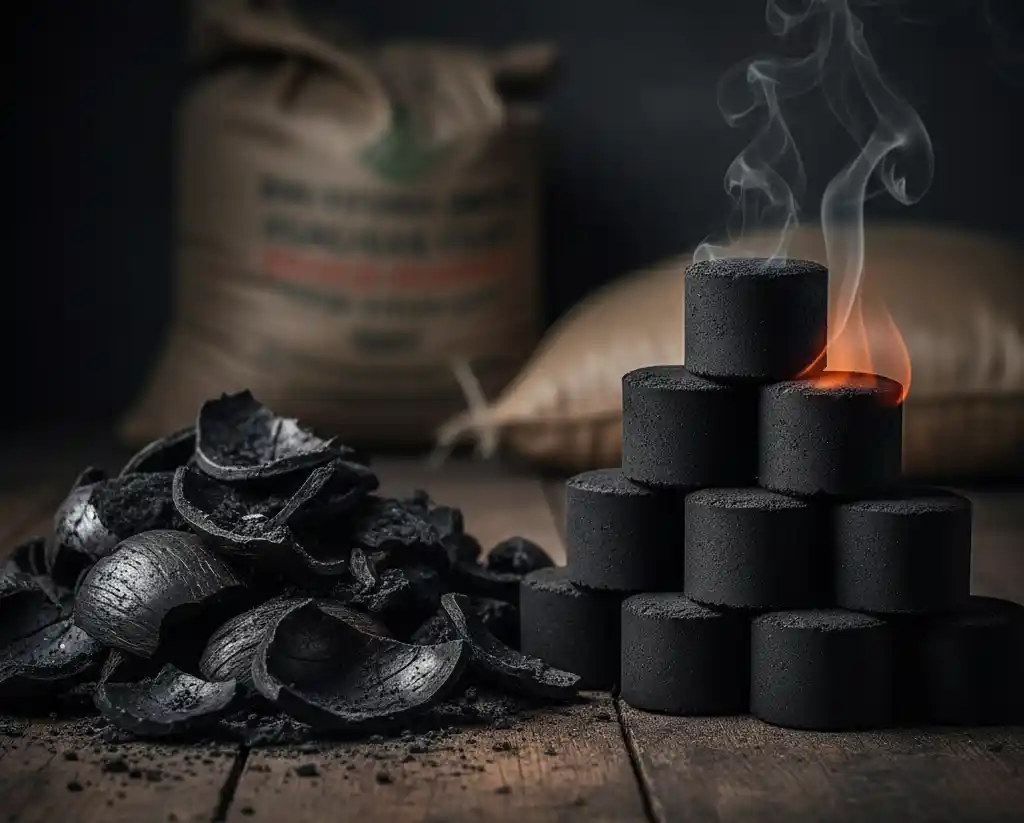
Understanding the correct coconut shell briquette and adhesive mixture is essential for producing durable and efficient charcoal briquettes. Before exploring the details, readers may benefit from referring to the main article, Ideal Composition of Coconut Shell Briquette Mixture, which outlines the basic formulation principles used in briquette production. For broader perspectives on coconut-based industries, processing methods, and sustainable material utilization, additional insights are available on the homepage of jacoid.com, a resource that shares practical information related to coconut shell products and charcoal manufacturing.
Coconut shell briquettes have gained popularity as a sustainable fuel due to their high calorific value, low ash content, and cleaner combustion compared to traditional charcoal. However, these advantages strongly depend on how producers formulate the mixture, especially the balance between charcoal material and adhesive. An improper mixture often results in briquettes that crack easily, burn unevenly, or generate excessive smoke during use.
Role of Coconut Shell Charcoal in the Mixture
Carbonized coconut shell charcoal forms the foundation of any briquette mixture. Producers typically carbonize the shells at controlled temperatures to achieve a high carbon content while minimizing impurities. After carbonization, they grind the charcoal into fine particles to improve density and bonding strength. Particle size plays an important role, as finer charcoal powder allows better interaction with the adhesive, resulting in stronger and more uniform briquettes.
When producers use inconsistent or coarse charcoal particles, the adhesive cannot bind the material evenly. This often leads to weak spots that reduce briquette durability and affect combustion performance.
Importance of Adhesive in Briquette Production
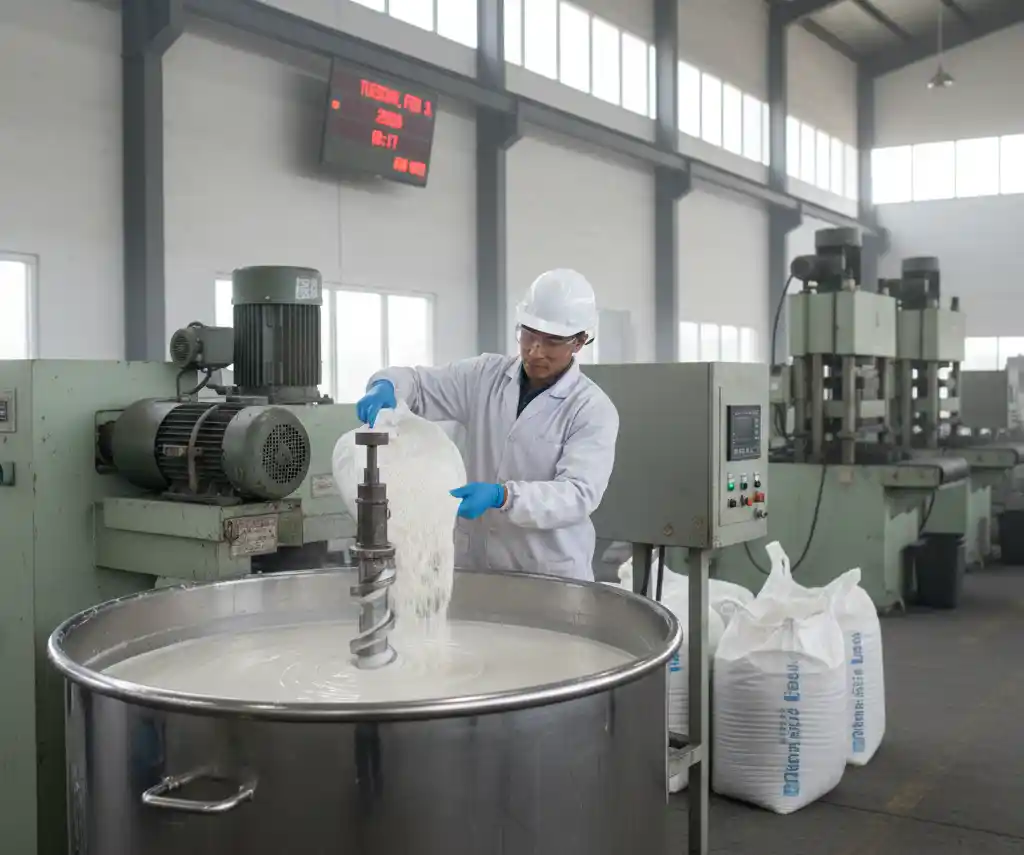
The adhesive, often referred to as a binder, is a critical component in the coconut shell briquette and adhesive mixture. Natural adhesives such as tapioca starch are commonly used because they are safe, affordable, and widely available. These adhesives help bind charcoal particles together and maintain the briquette’s shape during molding, drying, packaging, and transportation.
The adhesive ratio must remain carefully controlled. In most cases, producers use between 3% and 8% adhesive, depending on the intended application and desired briquette strength. Using too little adhesive causes the briquettes to crumble, while excessive adhesive can reduce burning efficiency and increase smoke production.
Mixing Process and Moisture Control
Water supports the adhesive activation and mixing process, although it does not act as a structural material. The right amount of water creates a dough-like consistency that is easy to mold and strong enough to hold its shape. Too little water makes mixing difficult, while excess water extends drying time and increases the risk of surface cracks.
Proper mixing ensures that the adhesive distributes evenly throughout the charcoal powder. Producers often use mechanical mixers for large-scale production to maintain consistency, while thorough manual mixing can still produce reliable results for small batches.
Impact on Briquette Performance
A well-prepared coconut shell briquette and adhesive mixture directly affects burning duration, heat stability, and ash residue. Briquettes with balanced composition burn longer, produce steady heat, and leave minimal ash. These characteristics make them suitable for household cooking, barbecuing, and industrial applications such as shisha or small-scale manufacturing processes.
Consistency also improves market reliability. When producers standardize their mixture formulation, they can deliver uniform product quality and build long-term trust with buyers.
Conclusion
Achieving the right coconut shell briquette and adhesive mixture requires careful control of charcoal quality, adhesive ratio, and moisture content. By applying proper formulation and mixing techniques, producers can create strong, efficient briquettes that support sustainable energy use while meeting market expectations.
